Scott Melnyk
Research in Sedimentology and Ichnology
About
As a sedimentologist and ichnologist, I am interested in the ways life and landscapes interact to shape the stratigraphic record. I earned my PhD in tidal ichnology at the University of Alberta and completed a postdoc at the University of Utah working on outcrop analogs for subsurface carbon reservoirs. I am now an Assistant Professor of Sedimentary Geology at the University of Alaska Fairbanks, where my research integrates sedimentology, ichnology, and drone-based modeling to explore how depositional systems evolve. By connecting modern processes to ancient records, I translate sedimentary archives into tools for paleoenvironmental reconstruction, stratigraphic correlation, and reservoir characterization.
Interests
Process Ichnology
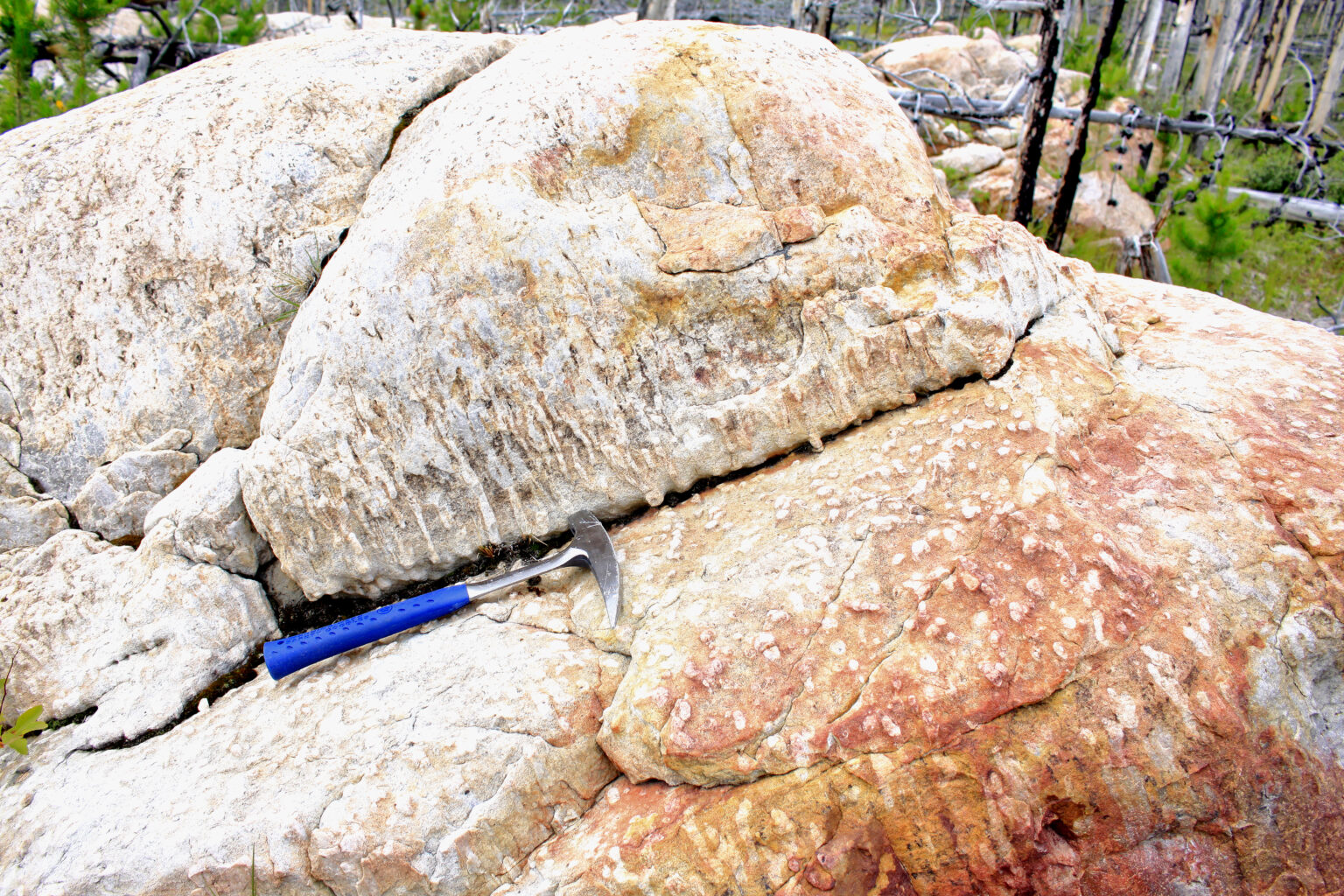
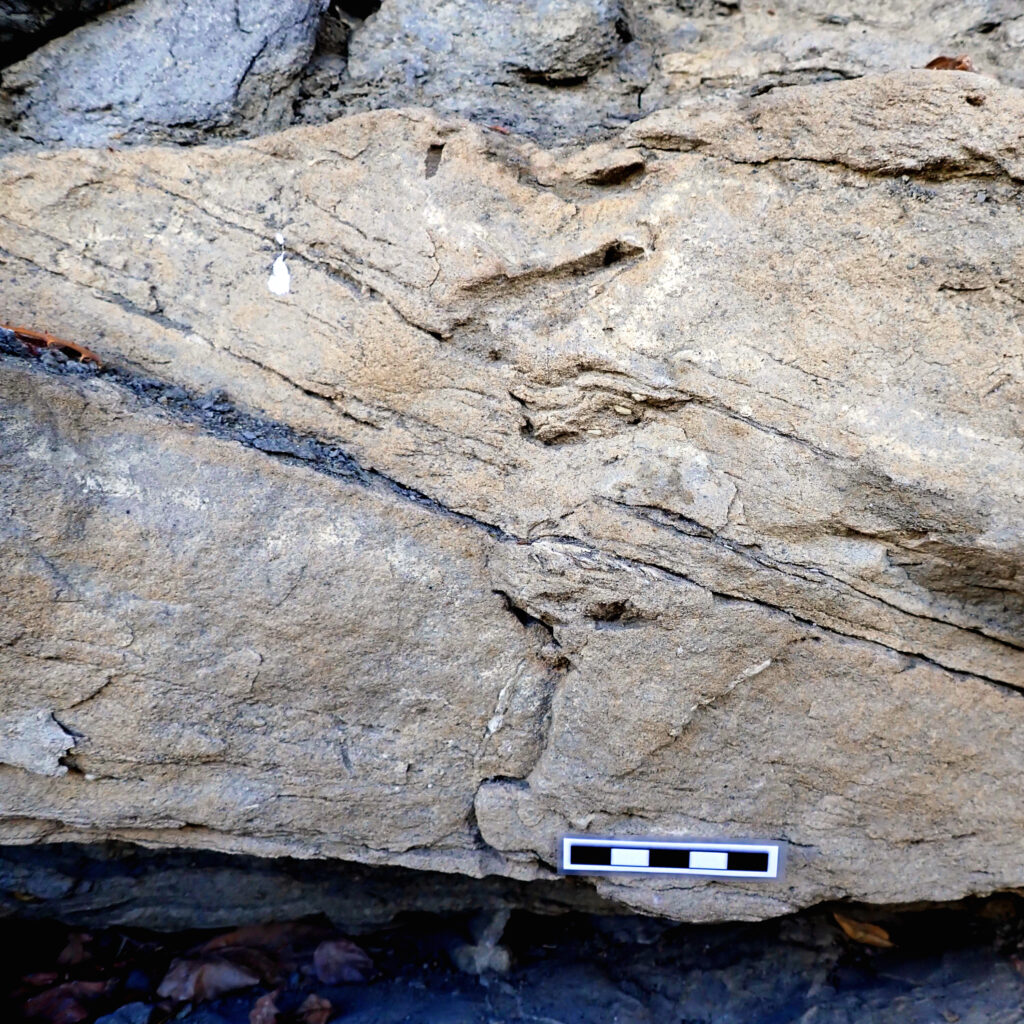
Process ichnology is a method of studying trace fossils by treating them as biologic sedimentary structures. This approach helps us understand the physical and chemical conditions of ancient environments. It’s especially useful for parameterizing salinity, dissolved oxygen, temperature, and sedimentation, to name a few. By adding this layer of detail, process ichnology improves paleoenvironmental interpretations beyond what can be achieved by traditional facies analysis. To the right is a photo of piperock, which shows evidence for a dense population of marine invertebrates who built vertical dwelling burrows in the sediment during the Cambrian explosion.
Neoichnology
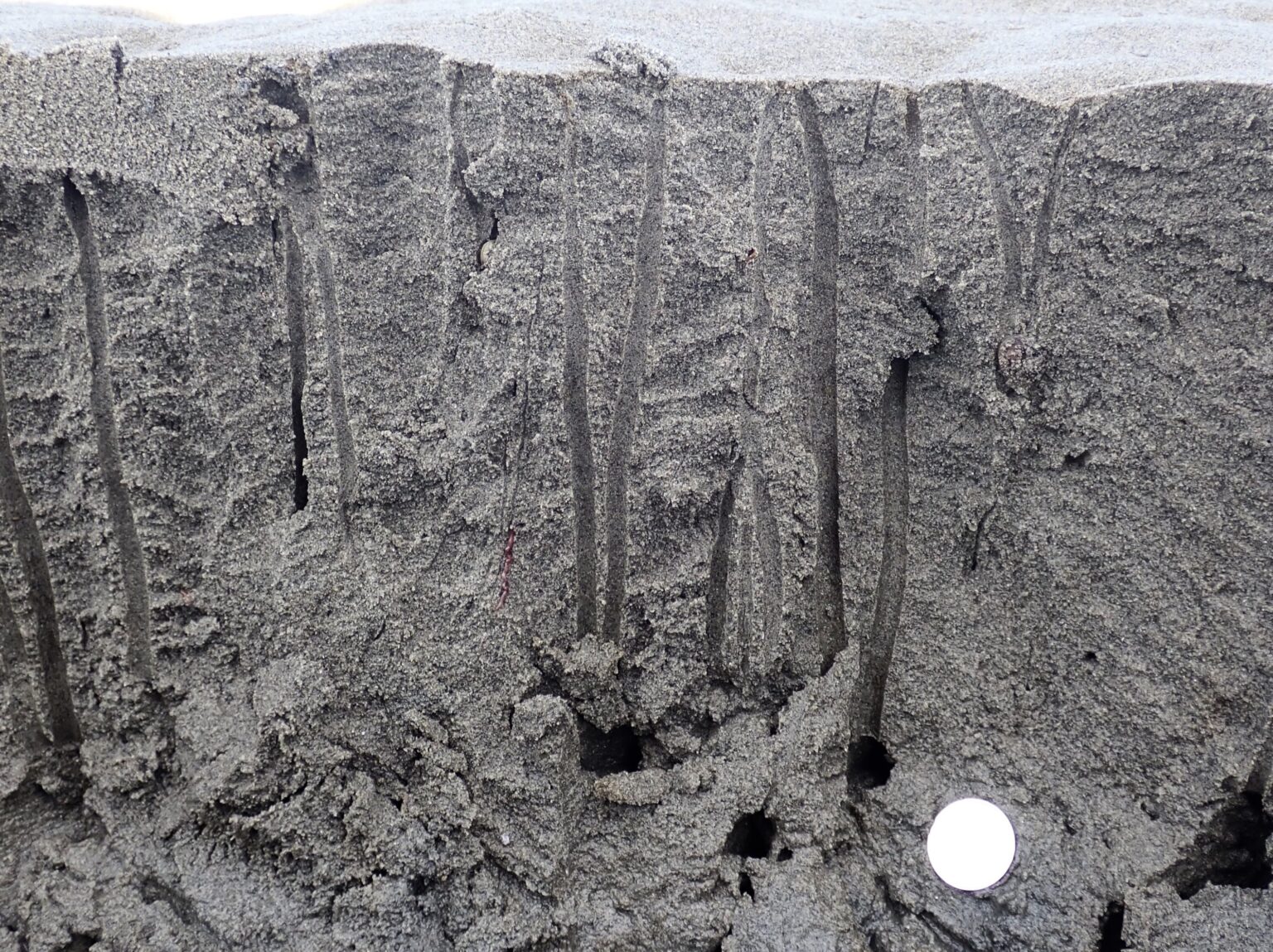
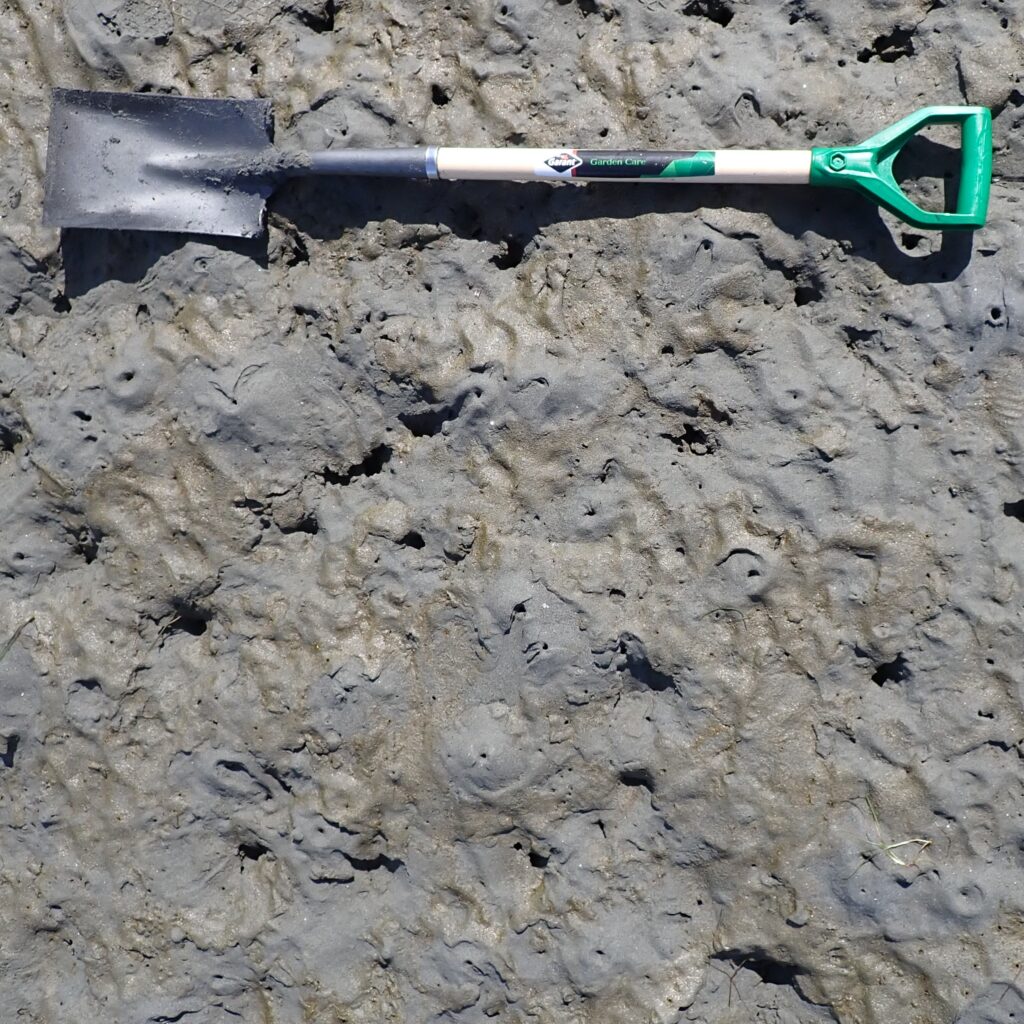
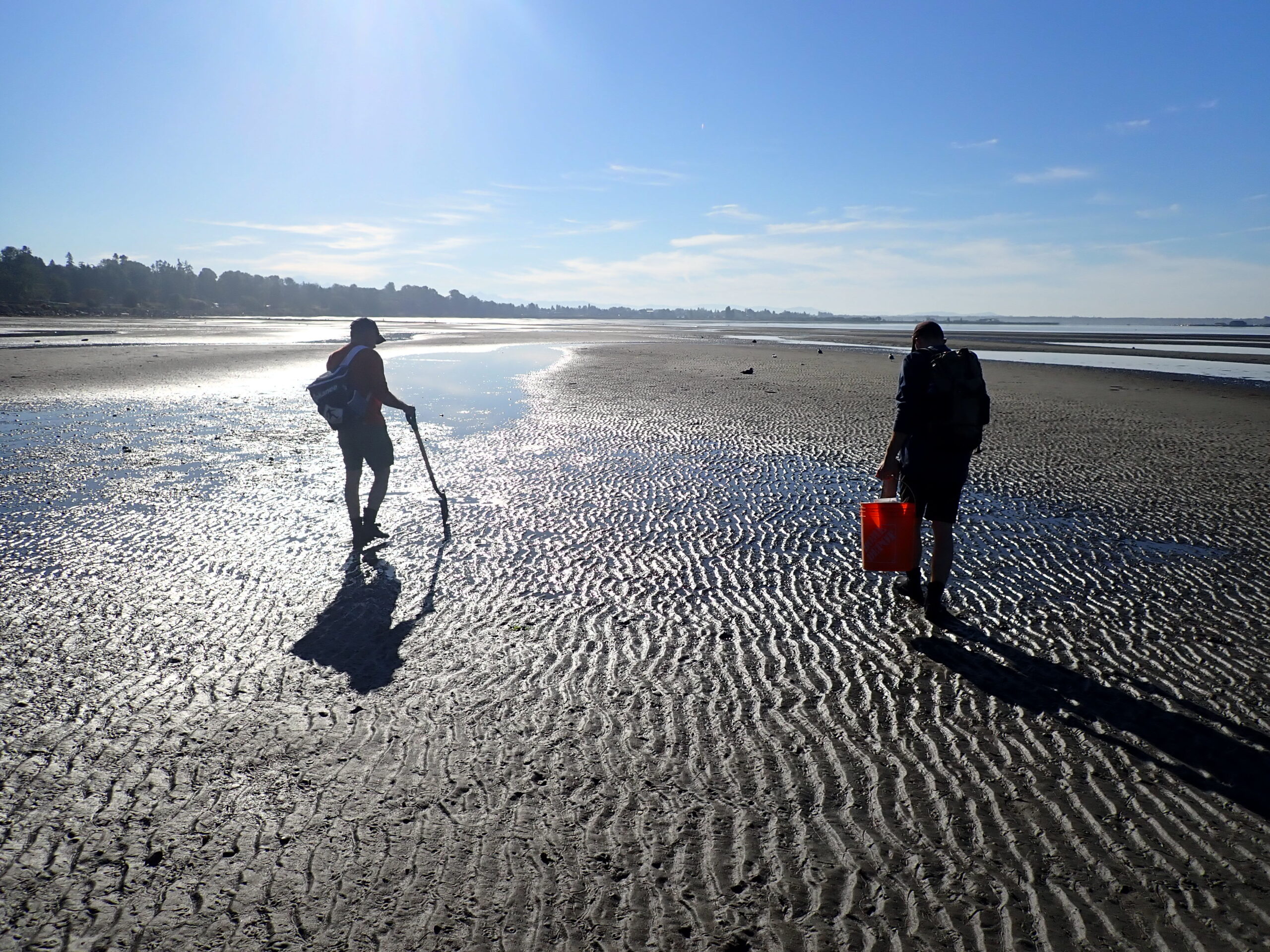
Neoichnology is the study of traces made by burrowing organisms in modern environments. By observing how these organisms interact with their environment today, we can better understand how to interpret similar traces preserved in ancient rocks. This approach helps us develop tools, known as paleoenvironmental proxies, that link ichnological characteristics to specific environmental conditions. The photo to the left shows traces left behind by clams along the coast of British Columbia (Canadian nickel for scale). The vertical features reflect the position of their siphons, which help them maintain contact with the sediment surface for reasons such as respiration, feeding, and waste removal.
Conservation Research
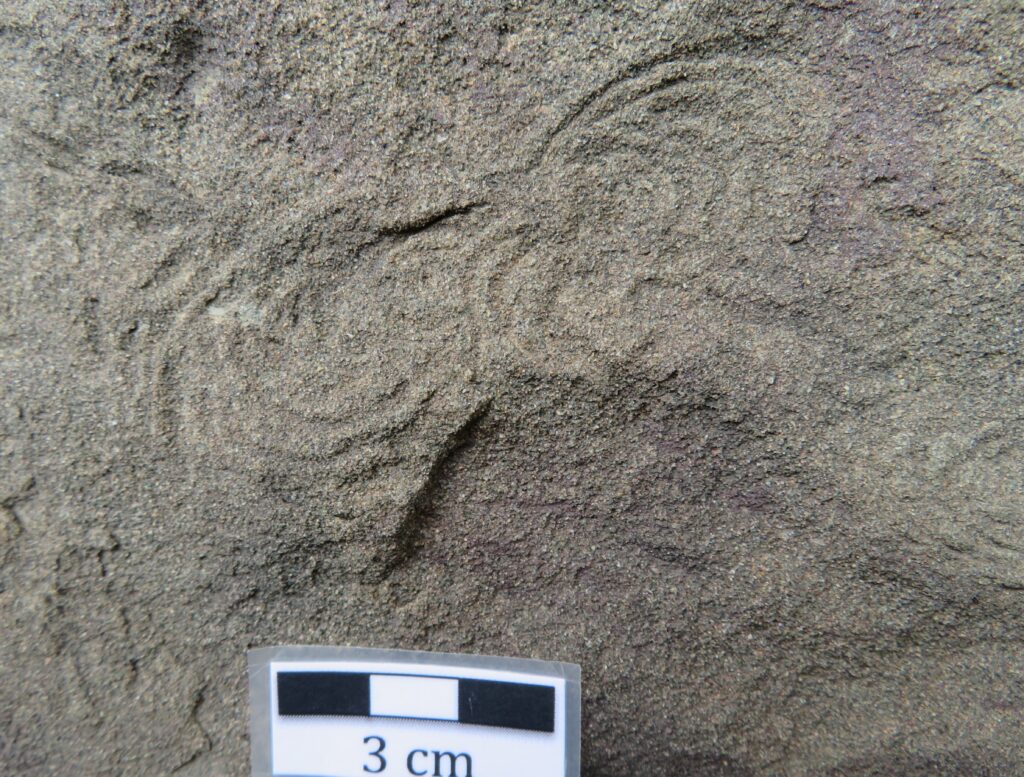
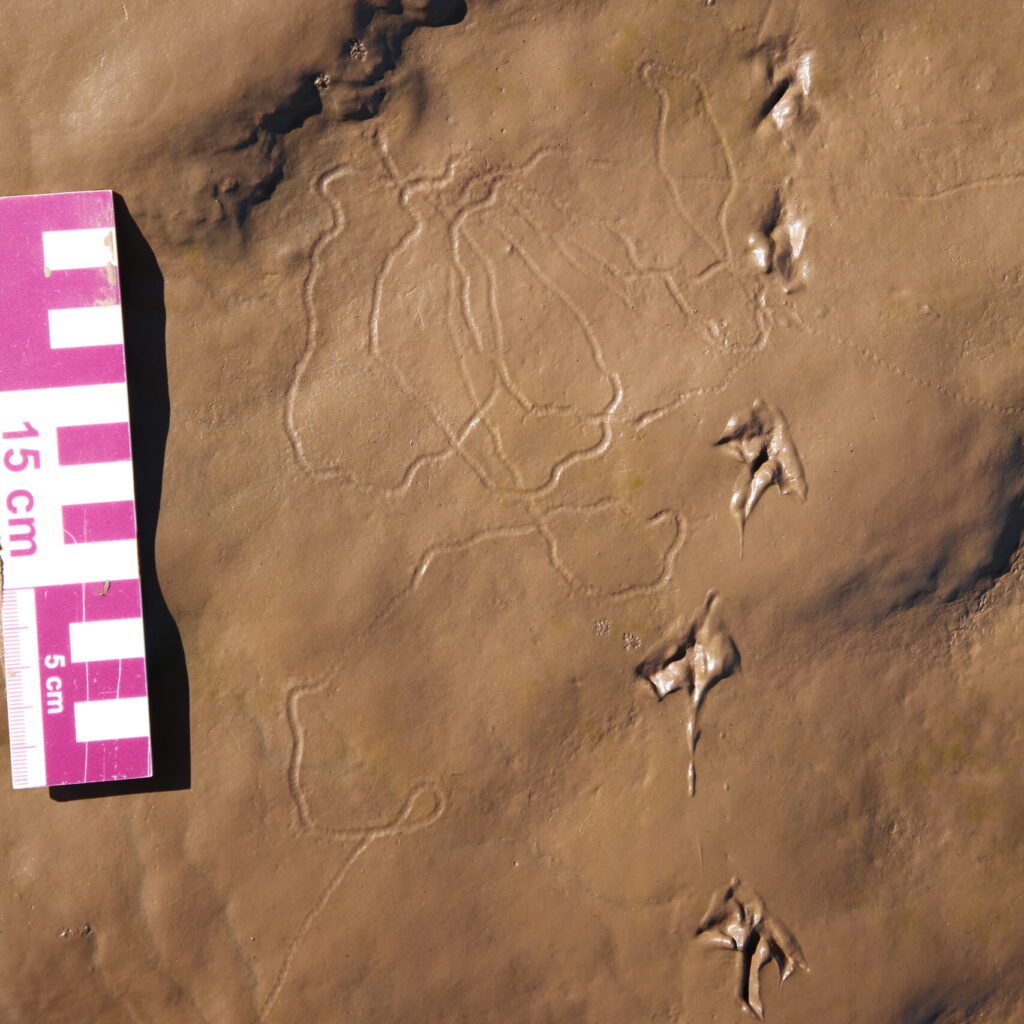
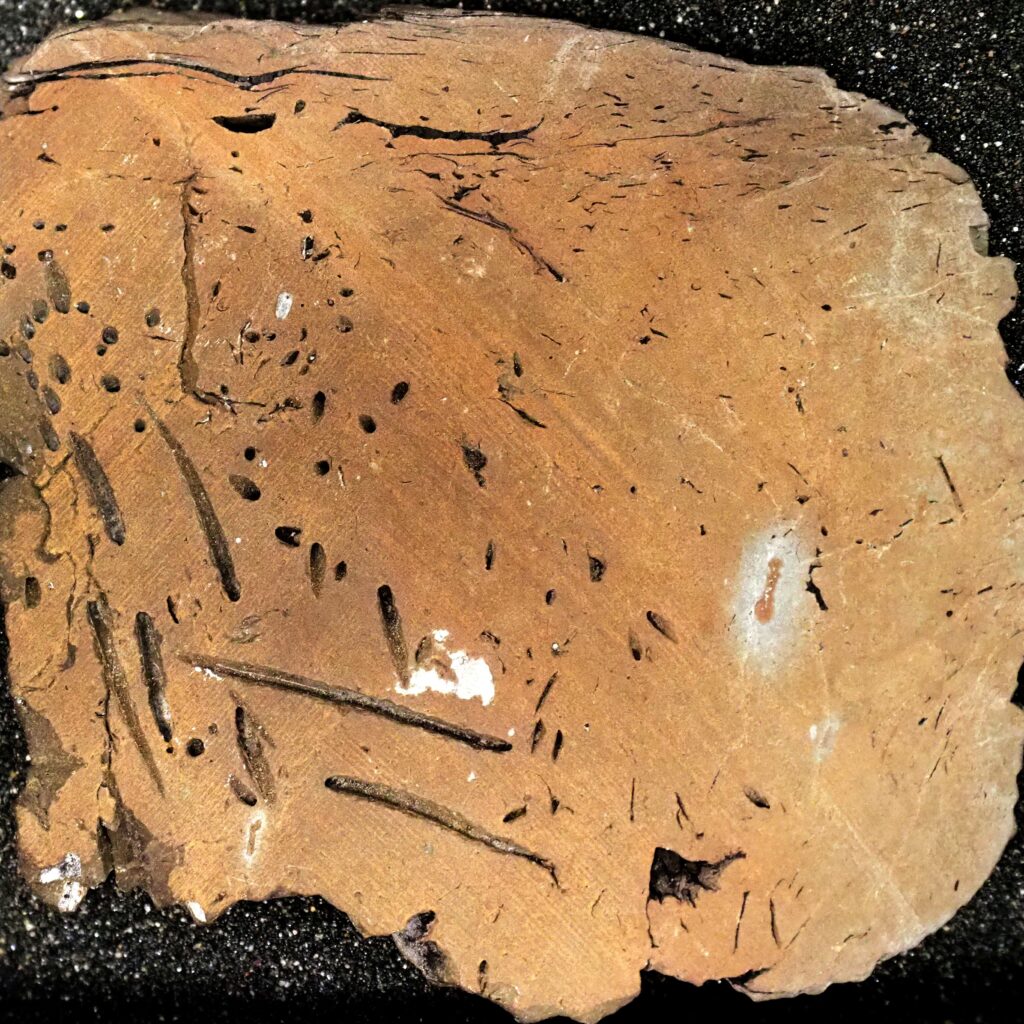
Conservation paleobiology is an interdisciplinary field that uses the geohistorical record to understand present-day ecosystem resilience and vulnerability. Biogenic stressors that are amplified by global change today include ocean warming, deoxygenation, acidification, and eutrophication. These same factors have played a major role in several marine extinction events in Earth’s history. Studying the ichnological record of events can therefore provide a long-term perspective on how marine invertebrates are being affected by environmental change today. The photo to the right shows Aratichnus, a trace fossil left by an invertebrate exploiting a patchy food resource during the hothouse climate of the Eocene.
Drone Photogrammetry
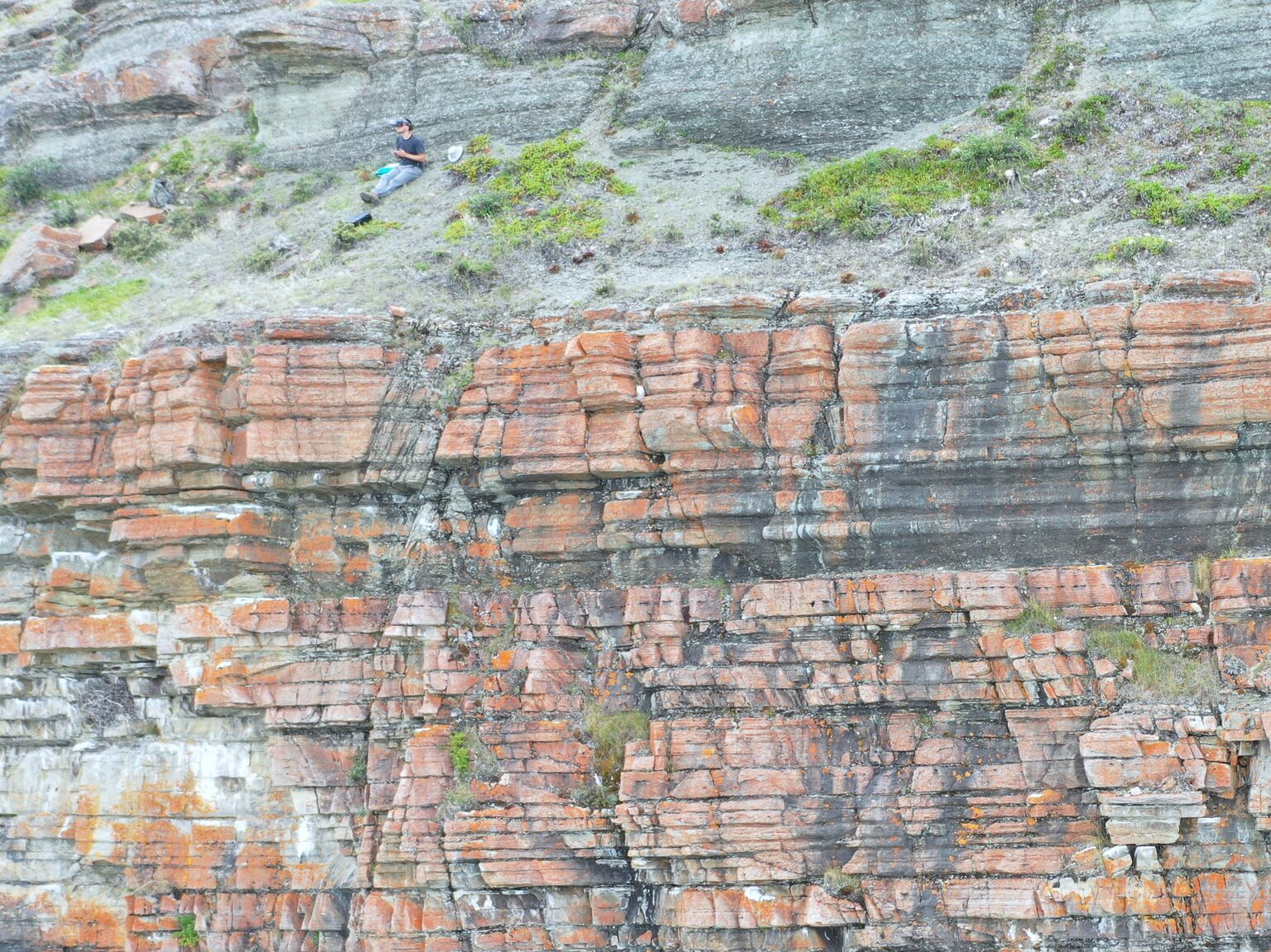
Photogrammetry is a technique that uses georeferenced photos to build 3D models, allowing for detailed observations and accurate spatial measurements. As drone technology continues to improve and become more accessible, photogrammetry is playing a growing role in fieldwork across many disciplines. A key part of my research involves developing new ways to generate quantitative datasets that go beyond what traditional field methods can achieve. To the left is a photo of marine shelf deposits from the Cambrian period (me at the top for scale). This is one of several hundred overlapping photos that were used to reconstruct this outcrop exposure in a digital format. It is a great way to bring the field back with you to the lab!
Geologic Carbon Storage
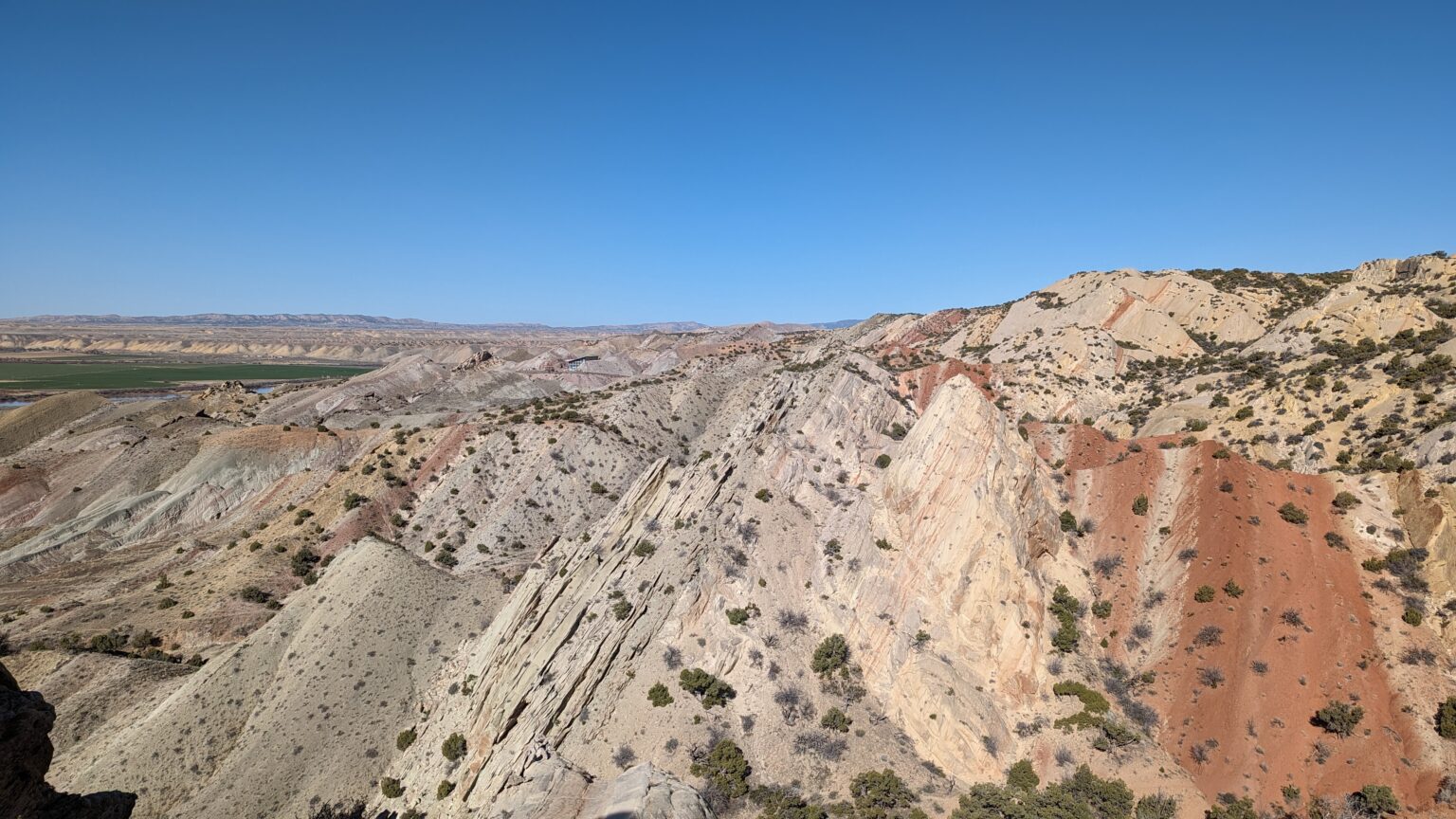
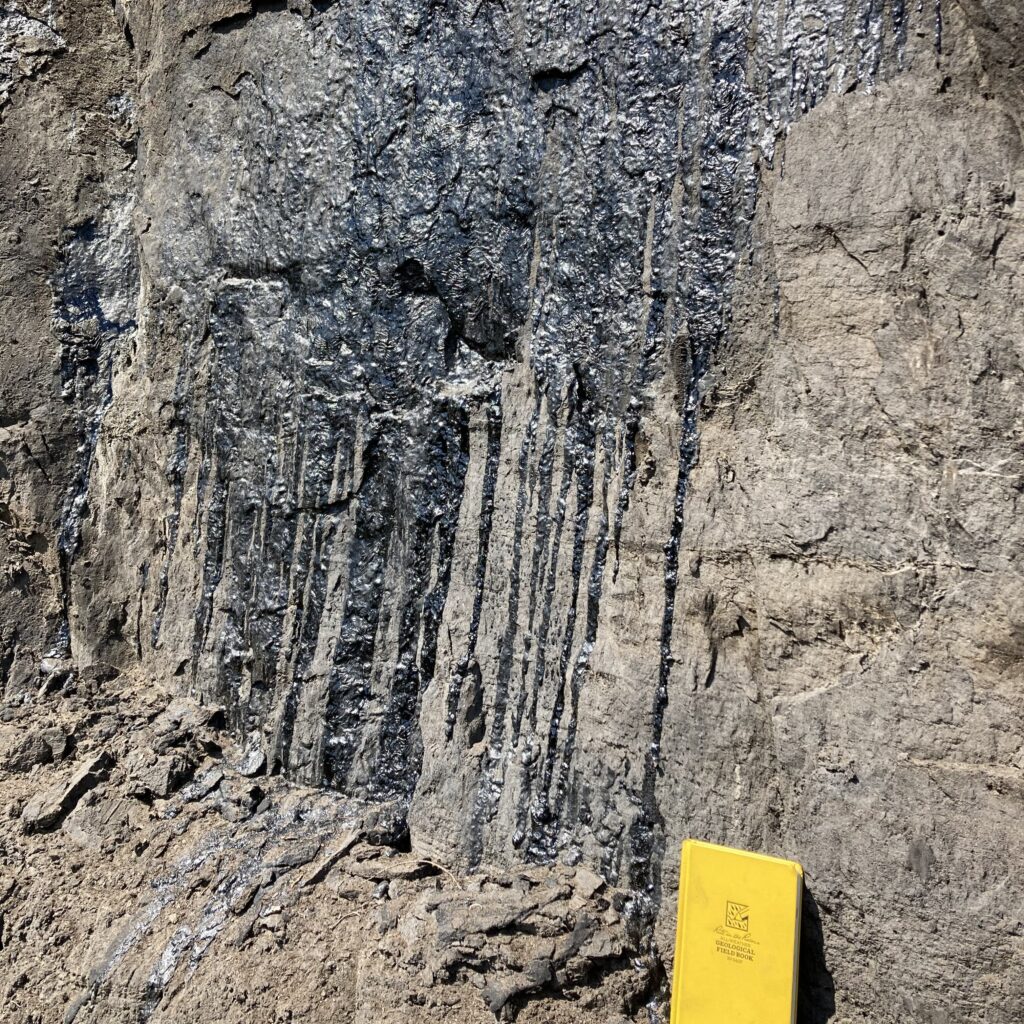
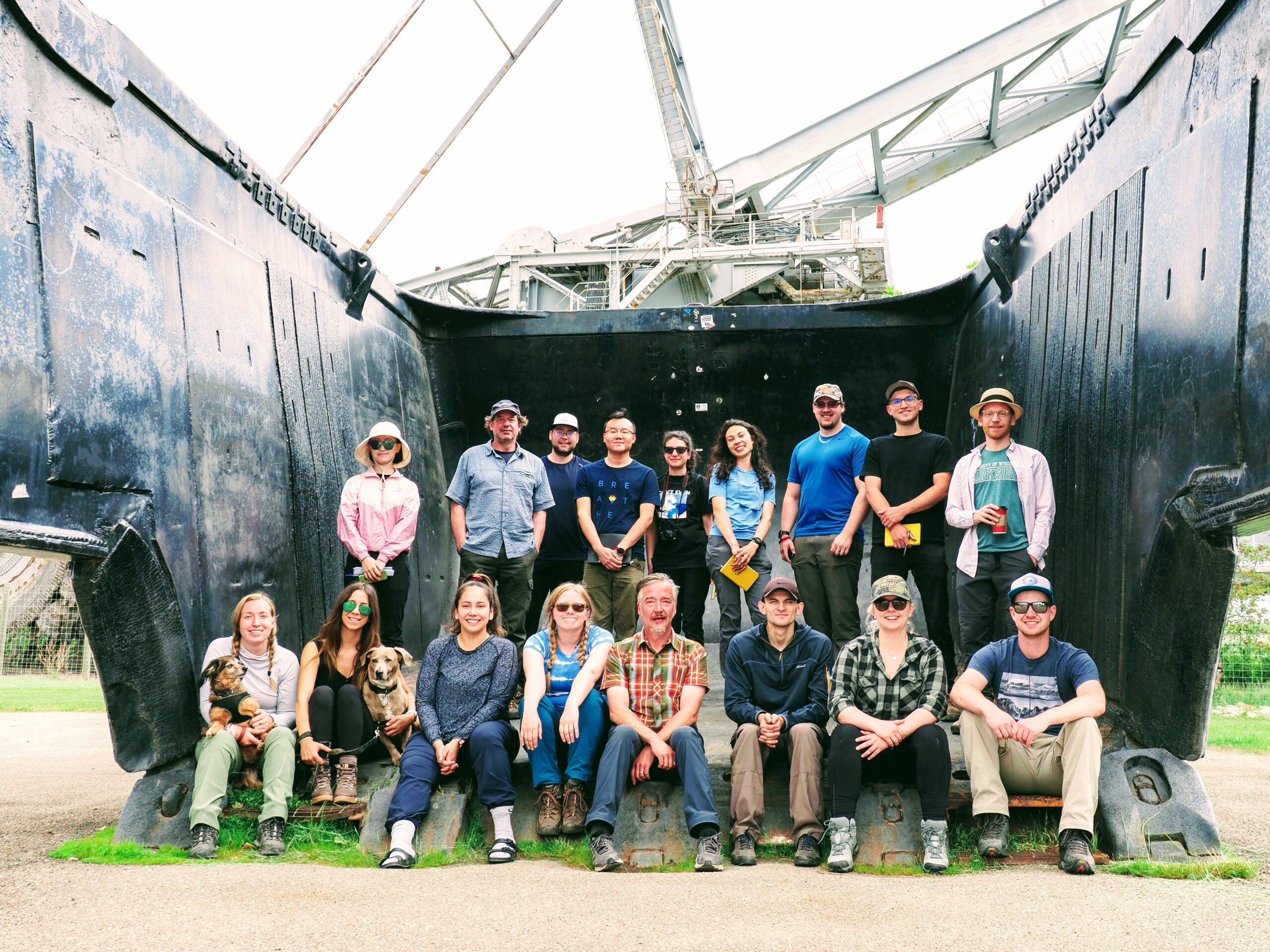
Geologic carbon storage is a method for reducing greenhouse gas emissions by injecting carbon dioxide deep underground into suitable rock formations. Understanding the characteristics of these potential storage sites—such as their porosity, permeability, and sealing capacity—is essential for ensuring long-term storage security. To the left is an image of Mesozoic strata in Dinosaur National Monumenet, Utah, which serves as an analog for storage units deep below the Earth’s surface.
Topics
Publications
Scott Melnyk, Cody N. Lazowski, Shahin E. Dashtgard, Murray K. Gingras (2025) Topographic controls on the distribution of bioturbation in an intertidal sandflat. Sedimentology.
Scott Melnyk, Baptiste Coutret, Drew Brown, John-Paul Zonneveld, Jeffrey L. Kavanaugh, Murray K. Gingras (2025) Assessing Vertical Bioturbation Intensity from Bedding Planes. Geological Society of London, Special Publication 556.
Brette S. Harris, Cornel Olariu, Scott Melnyk, Maya T. LaGrange, Kurt O. Konhauser, Murray K. Gingra (2024) Aratichnus igen. nov. from the Eocene-aged Baronia Formation, Àger Basin, Lleida, Spain. Ichnos.
Weiduo Hao, Logan Swaren, Jingyi Wang, Daniel Baker, Scott Melnyk, George W. Owttrim, Hongbo Zeng, Thomas J. Algeo, Murray K. Gingras, Daniel S. Alessi, Kurt O. Konhauser (2023) The impact of aggregation between clay and phytoplanktonic cyanobacteria on trace elemental cycling in coastal environments. Geochimica et Cosmochima Acta.
Scott Melnyk, Cody N. Lazowski, Murray K. Gingras (2022) The sedimentological and ecological significance of an unusual biodeformational structure related to a feeding behavior in gulls (Larus sp.). Ichnos.
Scott Melnyk, Anders Cowper, John-Paul Zonneveld, Murray K. Gingras (2022) Applications of photogrammetry to neoichnological studies: The significance of shorebird trackway distributions at the Bay of Fundy. Palaios.
Qi Chen, Alina Shchepetkina, Scott Melnyk, Murray K. Gingras (2022) Integrating Facies Analysis with Dipmeter Data to Characterize Point Bars of the Lower Cretaceous McMurray Formation, Christina River, AB, Canada. Marine and Petroleum Geology.
Chenyang Feng, Scott Melnyk, Cole Ross, Keith Shanley, John-Paul Zonneveld, Murray K. Gingras (2021) Lithofacies-dependent pore-throat radii and reservoir properties in the Lower Triassic Montney Formation, Puskwaskau Field, Alberta. Marine and Petroleum Geology.
Logan Swaren, Weiduo Hao, Scott Melnyk, Daniel Baker, Yuhao Li, George W. Owttrim, Hongbo Zeng, Murray K. Gingras, Daniel S. Alessi, Kurt O. Konhauser (2021) Surface reactivity of the cyanobacterium Synechocystis sp. PCC 6803–Implications for trace metals transport to the oceans. Chemical Geology.
Scott Melnyk, Stephen Packer, John-Paul Zonneveld, Murray K. Gingras (2021) A new marine woodground ichnotaxon from the Lower Cretaceous Mannville Group, Saskatchewan, Canada. Journal of Paleontology.
Scott Melnyk, Murray K. Gingras (2020) Using ichnological relationships to interpret heterolithic fabrics in fluvio-tidal settings. Sedimentology.
If you would like a PDF copy of a paper, please reach out to me at scott.melnyk@utah.edu.